Why sofa beds sag in the middle (mattress vs. frame)
Better days start with a better sleep.
Perfect fit. Built-to-order. Suited for every sofa bed.
A sofa bed that sags in the middle is not always caused by the mattress itself. In many cases, the real problem is the support deck, folding mechanism, or frame underneath. This guide explains:
- Why sofa bed mattresses sag in the middle
- How to tell whether the mattress or deck is causing the problem
- Common signs of support failure
- Simple diagnostic tests you can do at home
- Temporary fixes and long-term solutions
- When to repair the frame versus replace the mattress
Why sofa beds are uncomfortable
Sofa beds are convenient, but they are rarely as comfortable as a traditional mattress. Thin mattresses, folding frames, support bars, and aging mechanisms can all contribute to back pain, pressure points, and sagging.
What You'll Find In This Article
Why sofa beds sag in the middle
Traditional mattresses rest on solid foundations or slats. Sofa bed mattresses do not. They sit on folding metal mechanisms with tension bars, webbing, wire grids, or thin support decks that bend under weight.
Over time, several things can happen:
- The mattress foam softens or compresses
- The support deck loses tension
- Metal bars begin to bow downward
- Fabric webbing stretches
- Hinges and joints wear unevenly
- The sleeper frame shifts out of alignment
The result is usually the same: a dip or hammock effect in the center of the bed.
The two main causes of sagging
- The mattress is worn out or is poor quality
- The support deck or sleeper mechanism
Correct diagnosis matters. Replacing the mattress will not fix a failing deck, and adding support under the deck will not repair worn-out foam. Not sure what your sofa bed problem is? We have a designated guide to figure it out!
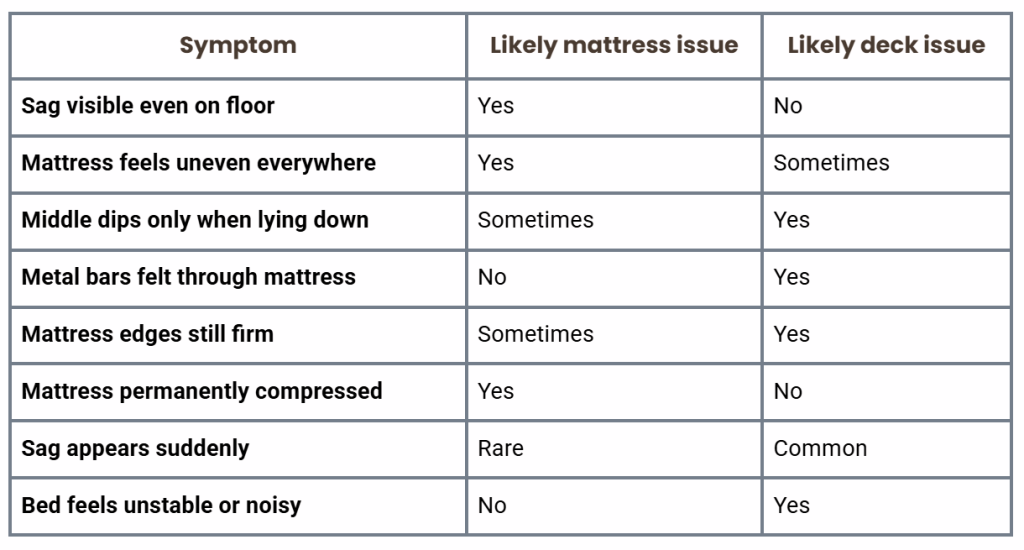
Deck problem vs. mattress problem
Need help choosing the right mattress?
We’ll help you find the right fit — no pressure, just expert advice.
The mattress is sagging
Permanent body impressions
If you can see visible dips after nobody has used the bed for several hours, the mattress materials (such as the foam or other support layers) may be breaking down.
Soft center with firmer edges
Most sleepers place their weight near the center of the bed, which leads to increased wear and tear in those areas. However, a good quality mattress should be able (and even be made) to hold up to this for a long time before breaking down.
Lumps or uneven folding areas
Repeated folding can create lumps and bumps where the mattress has to bend to fit inside the mechanism. These lumps and bumps can equal pressure points on your body, causing discomfort and real sleep issues.
The support deck is sagging
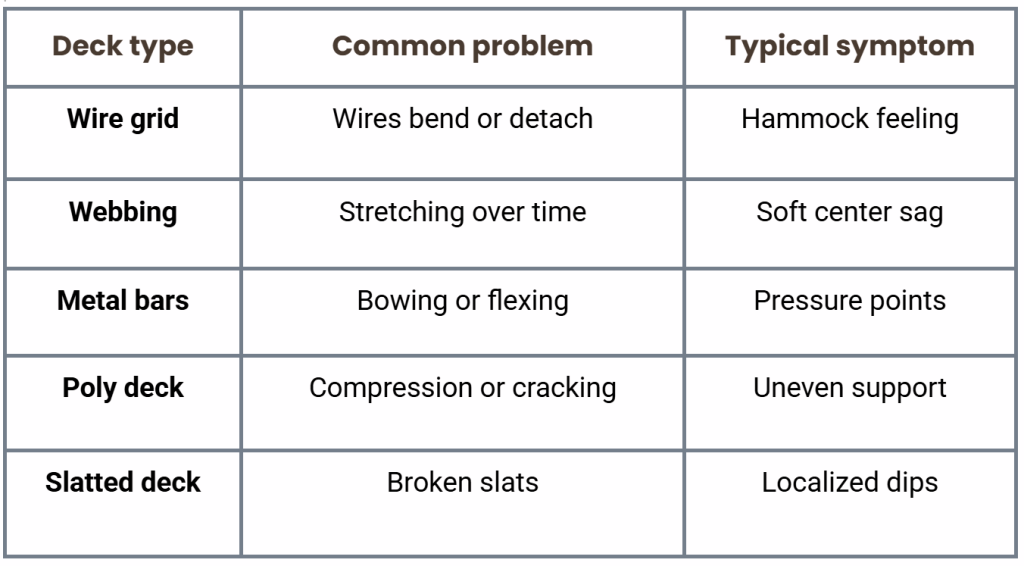
Bowed metal support bars
The metal crossbars holding the sofa bed mattress up can bend over time, especially in frequently used sleepers. This can create bows and an uneven sleep surface that results in aches and pains for your body.
Stretched webbing or fabric supports
Some sofa beds use flexible fabric or webbing beneath the mattress, these will gradually lose tension. But a good quality hide-a-bed should use durable materials, ensuring this doesn’t happen prematurely.
Broken wire grids
Like webbing or fabric supports, older sleeper mechanisms often rely on wire support systems that weaken or detach. This type of wear guarantees an uneven sleeping surface and discomfort for users.
Center dip only under weight
If the bed looks flat until someone lies down, the deck is likely flexing too much. This can be caused by the decking failing, or even by the frame bending. Neither of these things are supposed to happen in good quality sleeper sofas.
Creaking or shifting frame
Noise and movement often indicate worn joints or weakened structural components. Normal use can loosen bolts and screws, but if the problem exists in areas you aren’t able to quickly fix, a larger issue is present.
Why sofa beds often sag in the center specifically
The center section of a sleeper sofa handles the highest concentration of weight. It also contains the most moving parts.
Several engineering factors contribute to center sagging:
- Folding joints interrupt continuous support
- Middle bars carry the largest load
- Thin mattresses compress more easily
- Weight distribution concentrates near the hips
- Repeated opening and closing stresses the mechanism
Unlike standard bed frames, sleeper sofas prioritize folding function first and sleep support second.
Common sofa bed deck types and how they fail
Can a mattress topper fix middle sagging?
Sometimes, but only temporarily. A topper may improve surface comfort if the sag is mild, or if the mattress is simply too soft while the deck remains supportive A topper will not help if:
- The support system is failing
- Metal bars are creating pressure points
- The mattress has deep body impressions
- The center collapses significantly under weight
In fact, adding soft foam over a structural sag often makes alignment worse.
Temporary fixes for a sagging sofa bed
Add a support board
A thin bunkie board or plywood sheet between the mattress and deck can reduce some amount of flexing.
Tighten hardware
Loose bolts and joints can increase uneven movement and worsen sagging. Sometimes the fix is as simple as easy maintanence!
Rotate the mattress
Some sofa bed mattresses can be rotated to distribute wear more evenly. Most everyday mattresses are meant to be rotated regularly to ensure even wear, and this may help with your pull-out couch’s longevity.
Replace worn webbing
Certain sleeper sofas allow webbing replacement without replacing the full frame. Check out your brand or sofa bed’s size to see if replacements are available.
Signs your sleeper sofa may no longer be worth repairing
Some sagging problems can be repaired affordably. Others indicate the sleeper sofa has reached the end of its usable lifespan. Warning signs include:
- Twisted or misaligned frames
- Cracked welds
- Multiple broken support components
- Mechanisms that jam repeatedly
- Severe metal fatigue
- Replacement parts that are discontinued
If both the mattress and mechanism are failing, replacement is often more cost-effective than extensive repairs.
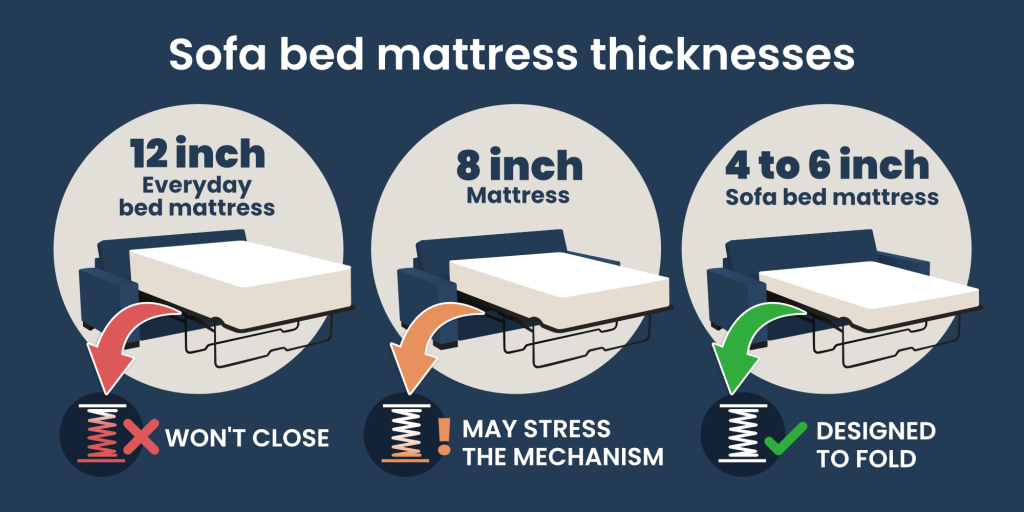
How mattress thickness affects sagging
Many owners assume a thicker mattress automatically solves sagging. In reality, excessive thickness can worsen support issues. A mattress that is too thick may:
- Overstress the folding mechanism
- Prevent proper closure
- Increase pressure on center joints
- Fold unevenly inside the sofa
This is why sleeper sofas have strict mattress thickness limits. We have a specialty guide to help you find your perfect hide-a-bed mattress thickness.
How to prevent sofa bed sagging
You can extend the life of a sofa bed by reducing stress on both the mattress and deck.
Best practices
- Avoid exceeding weight limits
- Open and close the mechanism carefully
- Rotate the mattress regularly if possible
- Keep the frame’s hardware tightened
- Replace aging mattresses before severe breakdown occurs
Questions and Answers
Why does my sofa bed sag in the middle?
A sofa bed usually sags in the middle because the mattress foam has worn out or the support deck underneath has weakened. Common causes include stretched webbing, bowed metal bars, broken wire grids, or compressed foam.
How can I tell if my sofa bed mattress is bad?
The easiest way is to place the mattress on the floor. If it still sags or feels uneven, the mattress is likely worn out. If it feels supportive on the floor, the sleeper mechanism or deck is probably the issue.
Can a sofa bed support deck be repaired?
Yes. Some support systems can be repaired by replacing webbing, tightening hardware, reinforcing support bars, or adding a bunkie board. Severe frame damage may require replacing the mechanism or the entire sleeper sofa.
Will a mattress topper fix a sagging sofa bed?
A topper may improve comfort temporarily, but it usually will not solve structural sagging. If the support deck is failing or the mattress has deep body impressions, a topper often masks the problem instead of fixing it.
Why do sofa beds feel worse in the center?
The center section handles the most body weight and contains the most moving parts in the folding mechanism. Over time, this area experiences the greatest wear and often develops dips or weak support.
Can metal bars cause sofa bed discomfort?
Yes. Bent or poorly supported metal bars can create pressure points and contribute to middle sagging. Thin or worn mattresses may allow sleepers to feel the bars underneath.
How long does a sofa bed mattress last?
Most sofa bed mattresses last about 5 to 7 years with regular use. Lifespan depends on mattress quality, usage frequency, sleeper weight, and how well the mechanism supports the mattress.
Is it better to replace the mattress or the sleeper mechanism?
It depends on the diagnosis. If the mattress sags even on the floor, replace the mattress. If the mattress feels fine off the frame, the support deck or mechanism likely needs repair or replacement.
Can a thicker sofa bed mattress prevent sagging?
Not always. A mattress that is too thick can overstress the folding mechanism and worsen support problems. Sleeper sofas have specific thickness limits that should be followed.
Why does my sofa bed only sag when someone lies down?
This usually points to a failing support deck or weak sleeper mechanism rather than a worn-out mattress. The structure underneath may be flexing too much under weight.