Maximum mattress thickness for sleeper sofas: Bi-fold vs. Tri-fold limits
Better days start with a better sleep.
Perfect fit. Built-to-order. Suited for every sofa bed.
A sofa bed mattress needs to do two jobs at once: provide comfortable sleep support and allow the sofa to close properly. Mattress thickness plays a major role in both.
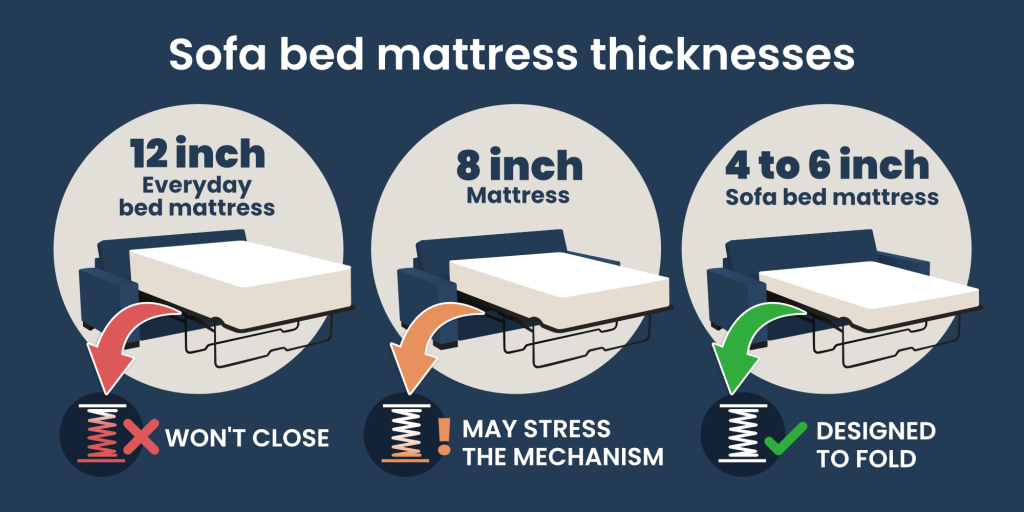
If it is too thick, the sofa may not close correctly, the frame can wear out faster, and the mattress itself may become damaged over time. In this guide, we’ll cover:
- Bi-fold and tri-fold sleeper sofas
- Common mattress thickness limits for each mechanism
- How foam type affects flexibility and foldability
- How to measure your sleeper sofa correctly
- Warning signs that a mattress is too thick
What You'll Find In This Article
Typical maximum mattress thickness limits
The table below shows common thickness ranges for sleeper sofa mechanisms.
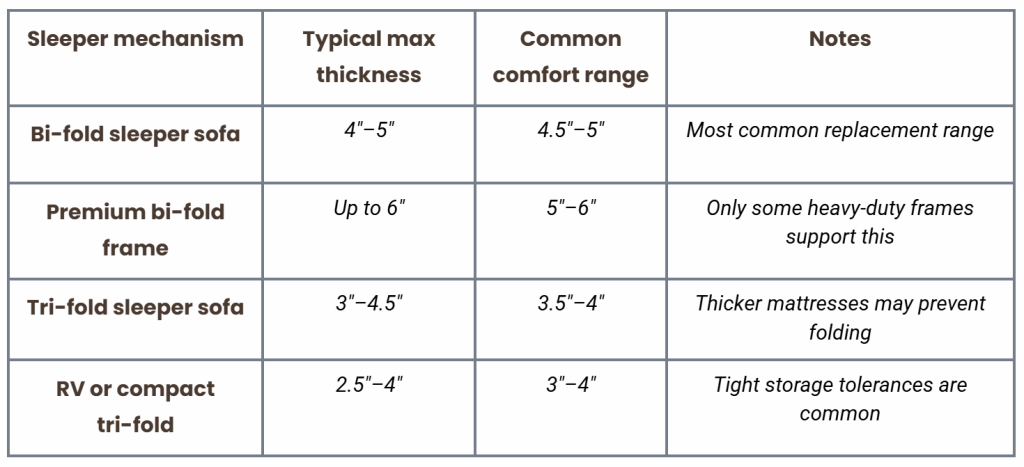
These are general guidelines only. Always measure your specific sofa bed before ordering a replacement mattress.
Why sleeper sofa mattress thickness matters
Every sleeper sofa frame has a limited amount of available space when closed.
Thickness affects how easily the sofa closes completely, long-term wear on the frame, whether fitted sheets can stay on during folding, and sleeping comfort.
In most cases, sleeper sofa problems are caused by replacement mattresses that are too thick rather than too thin.
Signs your current mattress is too thick
Your sleeper sofa mattress may already exceed the frame’s ideal limit if you notice:
- The sofa requires force to close
- Cushions bulge outward
- The mechanism squeaks or strains
- The mattress shifts during folding
- The center fold feels uneven
- Bedding must be removed every time
Need help choosing the right mattress?
We’ll help you find the right fit — no pressure, just expert advice.
Bi-fold vs. Tri-fold sleeper sofa mechanisms
Sofa beds can have a bunch of different types of mechanisms. Understanding yours will help you understand what kind of mattress you need.
Bi-folds
Bi-fold mechanisms fold the mattress in half when stored inside the sofa. These are the most common traditional pull-out sleeper sofas. Because the mattress only bends once, bi-fold systems can usually handle thicker mattresses.
Typical examples include:
- Traditional pull-out sofa beds
- Many queen sleeper sofas
- Older metal bar-style frame
- Premium residential sleeper sofas
Tri-folds
Tri-fold mechanisms fold the mattress into three sections. These systems are common in compact sleepers, RV furniture, apartment sofas, and loveseat sleepers. Because the mattress must bend more sharply, tri-fold systems usually require thinner mattresses.
Typical examples include:
- Compact apartment sleepers
- RV sleeper sofas
- Loveseat sleepers
- Folding foam guest beds
- Some modern click-fold systems
How foam type affects foldability
Different sleeper sofa materials are best suited to different needs.
Memory foam sofa bed mattresses
Memory foam compresses well and often folds more easily inside sleeper mechanisms. High-quality memory foam mattresses can provide that thicker feel without exceeding closure limits. However, very dense memory foam can become stiff in colder rooms and resist folding.
Polyfoam sofa bed mattress
Traditional polyurethane foam is lighter and often folds more easily, providing an good balance between comfort and foldability. Lower-density foam may wear out faster, though, which means replacing your mattress sooner.
Hybrid sofa bed mattresses
Hybrid mattresses with coils are usually less flexible and often require thinner profiles. Many sleeper sofas cannot safely accommodate thick hybrid constructions.
How to measure your maximum mattress thickness
Measuring is the most important thing to do before replacing your hide-a-bed mattress. Doing it correctly will ensure you don’t have any frustrating fit issues or returns.
For a more in depth instructions on how to measure, visit our guide.
Step 1: Open the sofa bed fully
Extend the mechanism completely onto a flat floor.
Step 2: Measure existing mattress thickness
On the side of the mattress, measure from the bottom surface to the top. Do not measure compressed edges, as these will be shorter and won’t describe the mechanisms true available space.
Step 3: Test folding space
If possible, slightly lift the existing mattress while folding the mechanism. This helps reveal whether the frame has unused clearance space. If the current sofa already closes tightly, it’s important to avoid ordering a thicker replacement.
Choosing the right thickness for comfort
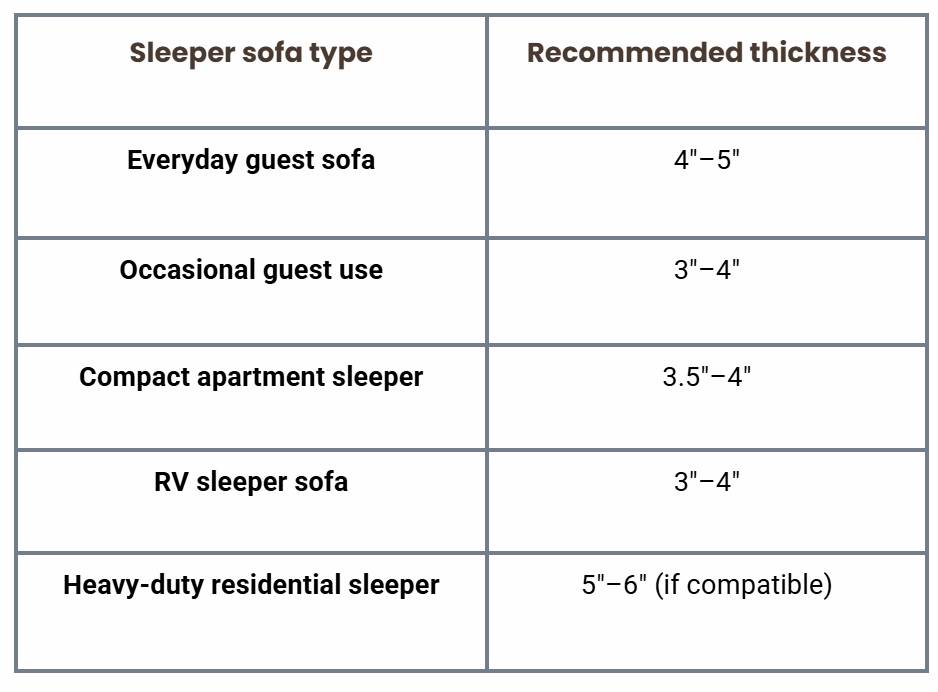
The best choice balances comfort, support, and compatibility with foldability. Higher-quality foam often improves comfort more than simply adding thickness.
Common thickness mistakes
Ordering a residential mattress: Standard mattresses are almost never compatible with sleeper sofa mechanisms.
Ignoring fold type: Bi-fold and tri-fold systems have very different flexibility requirements.
Measuring only the old mattress: The existing mattress may already be incorrect for the frame.
Assuming “more foam” means better sleep: Support layers and foam density matter more than raw thickness alone.
Forgetting bedding space: Sheets, protectors, and toppers also take up folding space.
Why mattress thickness rules vary between brands
Not all sleeper sofas are built the same way between brands. Two sofas with the same mattress size may still have very different thickness limits depending on the frame design, hinge placement, and folding geometry.
Some premium sleeper sofas are specifically engineered to handle thicker memory foam mattresses, while compact apartment or RV sleepers often prioritize space-saving designs that require thinner mattresses.
Different mattresses, different sizes
Sofa beds don’t use standard “mattress sizes”, often coming in unique dimensions dependant on their specific mechanisms. For example, “sofa bed queens” are shorter than a regular everyday queen.
Mattress thickness vs. mattress density
Thickness and density are often confused, but they affect comfort in different ways. Mattress density refers to how much material is packed into the foam.
Higher density lasts longer, improves support, reduces sagging, and better distributes body weight. A thinner, high-density mattress can feel more supportive than a thicker low-density mattress.
Should you add a mattress topper?
A topper can improve comfort, but it must usually be removed before closing the sofa.
Thin toppers under 1″ sometimes work with bi-fold systems, but tri-fold sleepers rarely have enough spare clearance. For many users, upgrading to a higher-quality replacement mattress works better than adding a topper.
Questions and Answers
What is the thickest mattress a sleeper sofa can handle?
Most sleeper sofas can handle mattresses between 4″ and 5″ thick. Some heavy-duty bi-fold frames may support up to 6″, while many tri-fold systems require thinner mattresses around 3″–4″.
Can I use a regular mattress on a sleeper sofa frame?
Usually no. Standard mattresses are typically too thick and not flexible enough to fold inside sleeper mechanisms.
Why won’t my sleeper sofa close completely?
The most common cause is a mattress that exceeds the frame’s folding clearance. Bedding, toppers, or shifted foam can also contribute.
Are memory foam sleeper sofa mattresses better?
Many people prefer memory foam because it reduces pressure points and folds well inside sleeper mechanisms. However, foam quality and density matter more than material type alone.
Does mattress thickness affect comfort?
Yes, but thicker is not always better. High-quality foam construction often improves comfort more effectively than extra thickness alone.
Can I leave sheets on a sleeper sofa mattress?
Usually yes, but thick fitted sheets, mattress protectors, or toppers may prevent the sofa from closing properly.