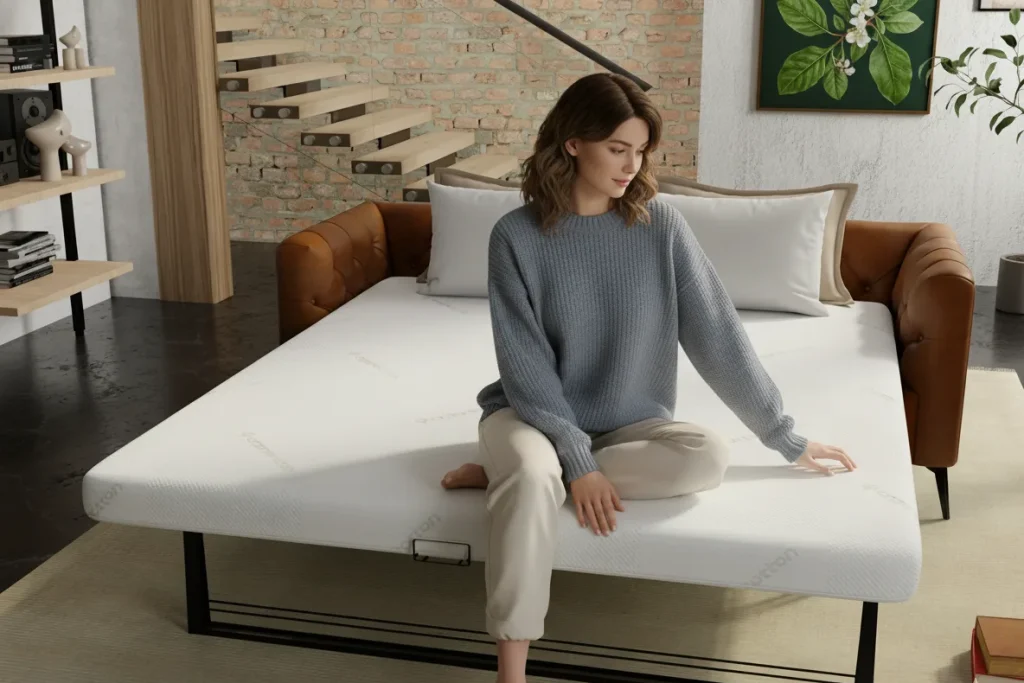
Replacing a Pottery Barn or West Elm sleeper sofa mattress
Better days start with a better sleep.
Perfect fit. Built-to-order. Suited for every sofa bed.
These sleeper sofas (also known as sofa beds, pull-out couches, and hide-a-beds) use a platform-style (also called “American Leather” or a similar platform) mechanism. It has no bars (great!) but zero tolerance for thickness (tricky!)
And adding to that, sofa beds don’t conform to “standard” mattress sizes, making replacing them even harder.
What You'll Find In This Article
Problem #1: The platform mechanism
Traditional sleeper sofas rely on metal bars and springs underneath the mattress. Many Pottery Barn and West Elm models use a platform system instead (a solid or taut deck that supports the mattress across the full surface).
That upgrade changes what “compatible” means. Platform mechanisms typically fold tighter, so the mattress must:
- Fold cleanly at hinge points
- Stay within strict thickness clearances
- Avoid fighting the mechanism when closing
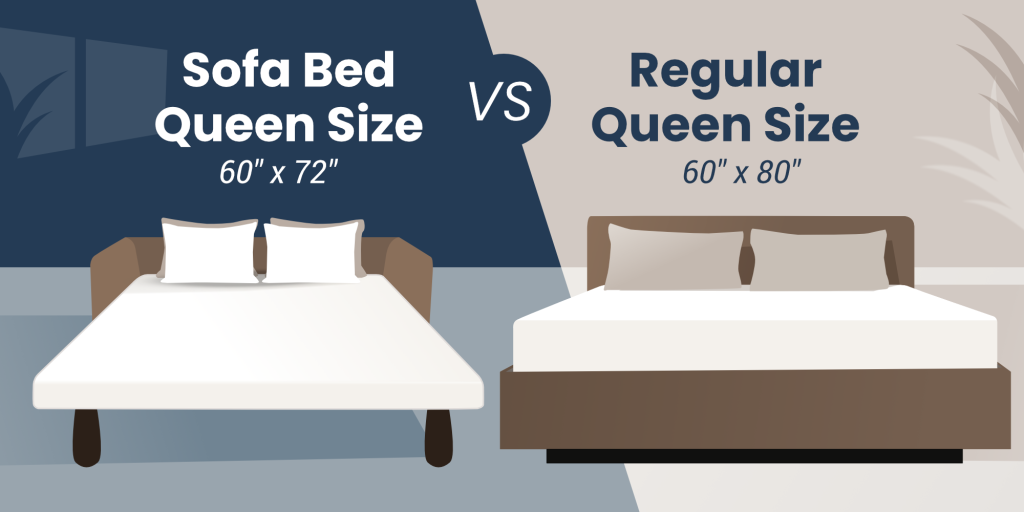
Thickness limit (why “thicker” is the wrong instinct)
In many platform/Comfort Sleeper-style systems, 4 inches is the practical maximum that allows the sofa to close properly. Going thicker is a common reason sleepers suddenly won’t close after a replacement.
Problem #2: Non-standard sofa bed sizes
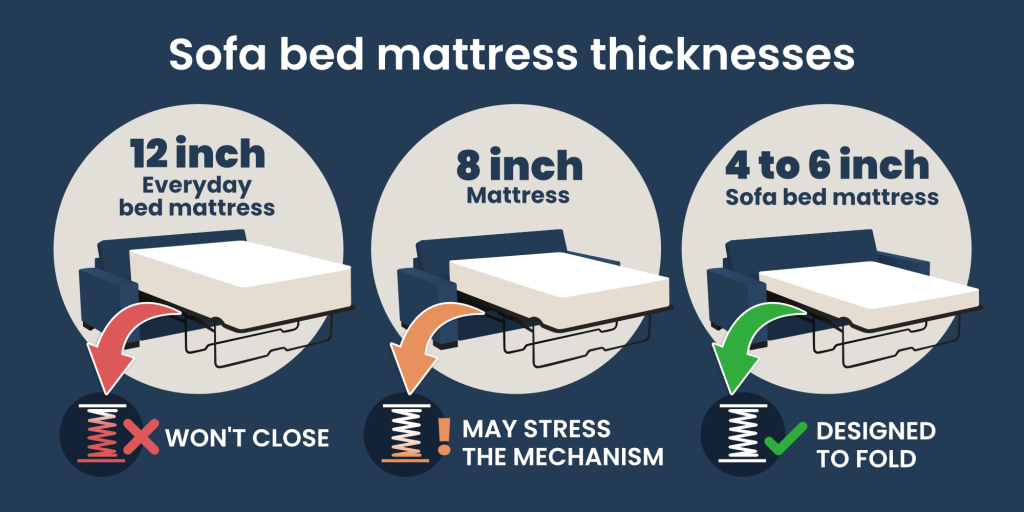
The second reason sofa bed replacements fail is size. Many shoppers search “Pottery Barn sleeper sofa mattress replacement” or “West Elm sleeper mattress” and assume a standard bed size will fit. But sleeper sofas frequently use non-standard mattress dimensions.
A standard, everyday “queen” is 60″ x 80″. Some sleeper frames are different enough that even a small mismatch can cause:
- Gaps at the edges
- Overhang that bunches fabric and damages hardware
- Or a too-tight fit that increases closing friction
Common queen mattress variations you may run into include:
- Wide queen (wider than a standard queen)
- Short queen / sofa queen (shorter than a standard queen)
- and “almost standard” sizes that are off just enough to matter
The solution
Your $3,000 sofa bed deserves better than a $200 Amazon mattress that won’t fit.
You won’t be able to buy a standard “bi-fold” mattress. Instead, you’ll need a specialized high-density, low-profile mattress that’s the perfect size and that is engineered to withstand the tight folding pressure of a platform system.
Need help choosing the right mattress?
We’ll help you find the right fit — no pressure, just expert advice.
Get the perfect Pottery Barn or West Elm sleeper sofa mattress replacement
A thin mattress on a platform needs density, not extra inches. Low-density foam compresses quickly and makes you feel the platform underneath (“bottoming out”).
To avoid that, your replacement should prioritize:
- Low-profile thickness that matches your closing clearance (often 4″)
- High-density foam (1.8 lb+ as non-negotiable)
- A build that folds repeatedly without resisting hinge points
Why you shouldn’t use a topper
Toppers feel like an easy fix for a firm sleeper mattress — but for platform/Comfort Sleeper-style mechanisms, a topper is one of the most common reasons the sofa stops closing properly.
Even a modest topper can:
- Exceed the frame’s clearance
- Interfere with folding geometry
- Snag fabric
- Increase stress on hinge/scissor components if the sofa is forced shut
What kind of sleeper mechanism do Pottery Barn and West Elm use?
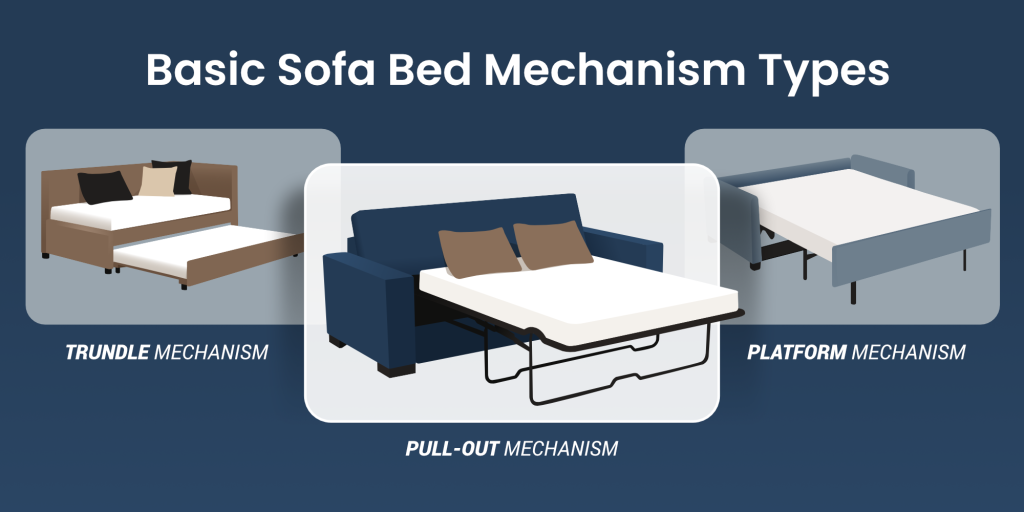
Many Pottery Barn and West Elm sleeper sofas use a platform-style mechanism, often similar to what’s known as a “Comfort Sleeper” system.
Unlike traditional hide-a-bedss that rely on metal bars and springs, these designs use a solid or tensioned deck to support the mattress evenly across the entire surface.
You may also see this referred to as:
- “Platform” sofa bed
- “Bar-free” sleeper sofa
- “Solid deck” sofa bed
- “Comfort Sleeper-style” mechanism
This design improves comfort significantly, but it also creates much stricter requirements for mattress thickness, flexibility, and overall fit.
Platform vs traditional

How to measure your Pottery Barn or West Elm sleeper (correctly)
If you want to avoid trial-and-error returns, measure the frame, not the pull-out couch’s marketing label.
Step 1: Measure the sleeping platform
Open the sleeper fully and measure:
- Width across the usable deck area
- Length from head to foot on the deck surface
These numbers are what your replacement must match to avoid gaps, shifting, and friction.
Step 2: Confirm thickness clearance
Begin folding the bed slightly and identify the tightest point where the mattress must pass as it starts to fold. Measure that opening to find your real maximum thickness.
Sofa bed mattress compatibility checklist
Use this checklist before purchasing any replacement mattress:
- Exact width and length (measured from the frame, not the label)
- Maximum thickness allowed (often around 4 inches for platform systems)
- Fold type (platform vs bi-fold vs tri-fold)
- Foam density (minimum 1.8 lb recommended)
- Clearance at hinge and folding points
- Ability to fold without resistance or bunching
If even one of these is off, the mattress may not fit or the sofa may not close properly.
Questions and Answers
Can I use a regular queen mattress in a Pottery Barn sleeper sofa?
No. A standard queen mattress (60″ x 80″) often won’t fit correctly in many Pottery Barn sleeper sofas.
Platform-style sleepers frequently use non-standard dimensions. Even a slight size mismatch can cause gaps, overhang, friction when closing, or damage to the mechanism. Always measure the platform itself rather than relying on the “queen” label.
Do West Elm sleeper sofas use standard mattress sizes?
Many West Elm sleeper sofas use platform-style mechanisms with non-standard mattress dimensions.
That means:
- A standard queen may be too long or too wide
- A short queen may still be slightly off
- “Almost standard” sizes can still prevent proper closing
Measuring the actual sleeping deck is the only reliable way to ensure a proper fit.