Sofa Bed Mattress: Fit Issue or break-in period?
Better days start with a better sleep.
Perfect fit. Built-to-order. Suited for every sofa bed.
Experiencing issues with your sofa bed mattress? The important question is this: Are you dealing with a fit issue or a needed break-in period to fix comfort? This guide explains the differences between the two, common warning signs to look for, what causes each issue, and how to troubleshoot your mattress before considering a return or exchange.
What You'll Find In This Article
Why the difference matters
Many customers assume that if a sofa bed will not close, the mattress simply needs “breaking in.” In reality, most closure problems are caused by sizing or compatibility issues, not comfort.
On the other hand, a mattress that closes perfectly may still feel too firm, too soft, or too thin for your preferences. That is where a comfort trial may apply. Knowing which category your problem falls into helps you:
- Troubleshoot the problem faster
- Avoid damaging the sofa mechanism
- Understand whether a return or exchange may be possible
- Set realistic expectations for foam break-in and adjustment periods
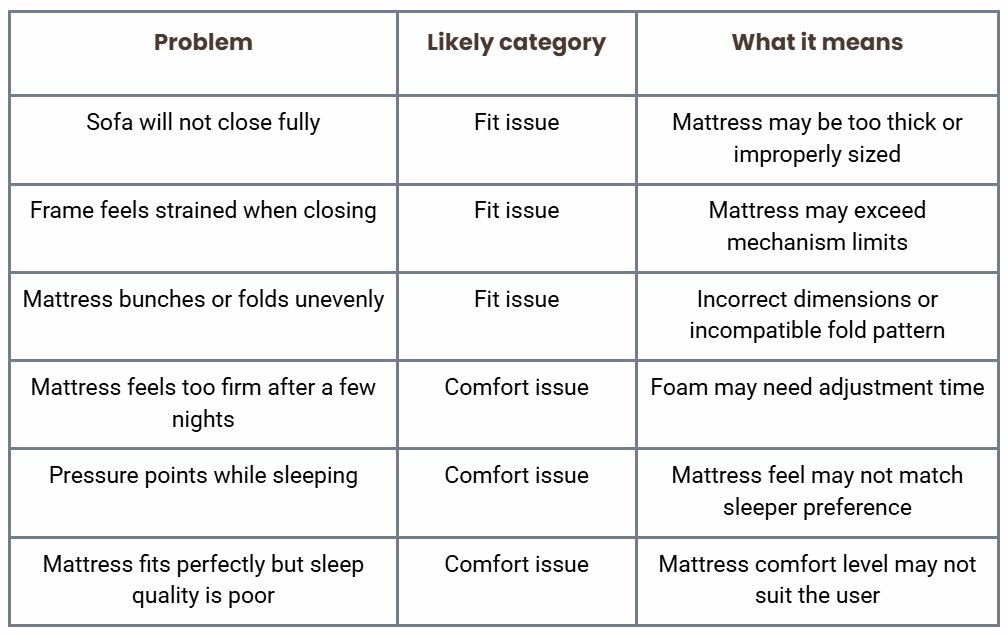
Quick comparison: Comfort issue vs break-in period?
Signs of a FIT issue
The sofa will not latch closed
If the front bar stays elevated, the sofa almost closes but stops short, or you need excessive force to close it, you’re experiencing a fit issue with the mattress.
Never force the mechanism closed. This can bend the frame or damage the mattress.
The mechanism feels unusually tight
A properly fitted sofa bed mattress should allow the frame to fold smoothly. If the mechanism suddenly feels stiff after installation, the mattress may be too dense, lack enough flexibility, or be interfering with hinge points.
The mattress shifts during folding
Some mattresses are designed for specific folding systems, such as a bi-fold versus a tri-fold. Having the wrong type can make the mattress shift during folding and interfere with the mechanism.
This issue can also be caused by having a mattress of the wrong size.
Signs of a COMFORT issue
The mattress feels too firm
New foam often feels firmer during the first few nights. This is especially common with memory foam, high-density foam, and cooler room temperatures (that can firm up a mattress).
Some materials soften slightly after a short adjustment period.
You notice pressure points
Shoulders, hips, or lower back discomfort may indicate the comfort level is not the right match for your sleep style.
Side sleepers often prefer more pressure relief, back sleepers may prefer firmer support, stomach sleepers usually need balanced support to avoid sinking.
The mattress feels different than expected
Comfort is subjective. Two people can have very different reactions to the same mattress. Factors include body weight, sleep position, temperature, and previous mattress experience.
Need help choosing the right mattress?
We’ll help you find the right fit — no pressure, just expert advice.
How to diagnose the problem step by step
Step 1: Check sofa closure
Can the sofa close fully without force?
- Yes → likely a comfort issue
- No → likely a fit issue
Step 2: Inspect the folding action
Does the mattress fold naturally with the mechanism?
- Smooth folding → comfort issue more likely
- Resistance or bunching → fit issue more likely
Step 3: Evaluate sleeping comfort separately
If the sofa functions correctly, focus on how the mattress feels during sleep. Consider:
- Firmness
- Pressure relief
- Support
- Motion isolation
- Temperature
Step 4: Review mattress specifications
Double-check:
- Thickness limits
- Mechanism type
- Required dimensions
- Mattress compatibility guidelines
Why sleeper sofa mattresses have stricter fit requirements
Unlike standard mattresses, sleeper sofa mattresses must fold inside a metal mechanism every time the sofa is closed. This creates tighter size and flexibility requirements. A traditional bed mattress only needs to support sleeping comfort. A sofa bed mattress must also fold into the frame, compress within clearance limits, and avoid putting pressure on hinges and bars.
What causes most fit issues?
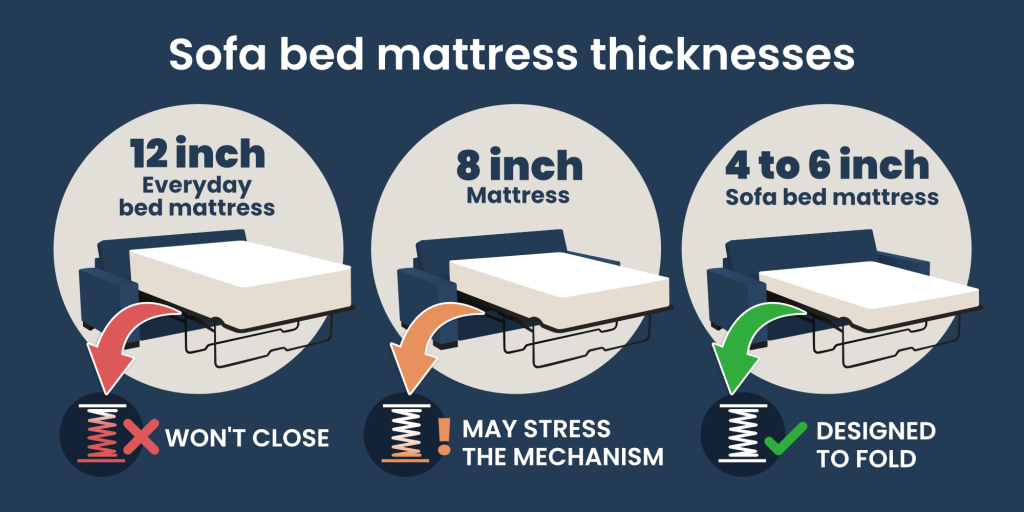
Incorrect thickness
This is the most common problem. Many sleeper sofas have maximum thickness limits. Even an extra inch can prevent proper closure.
Incorrect dimensions
Measurements that are slightly too wide or too long can create folding pressure inside the frame. Make sure to measure your sofa bed before purchasing a replacement, even if the label has the dimensions or name of the size.
A regular queen is much longer than a sofa bed queen. Even between brands, a “queen” or other size can be different!
Incompatible foam construction
Some high-density or hybrid mattresses are less flexible than traditional sleeper sofa mattresses. Even if the thickness appears correct, the mattress may resist folding.
Older or non-standard frames
Older sleeper sofas often have tighter tolerances than modern designs. Replacement mattresses may technically match the size but still interfere with closure.
Tips to avoid confusion before buying
Measure carefully: Always measure the existing mattress and frame before ordering a replacement.
Know your mechanism type: Bi-fold and tri-fold systems have different folding requirements, and other mechanisms perform differently too.
Check maximum thickness limits: Do not assume thicker is always better. Sleeper sofas are designed around specific clearance limits.
Separate comfort from compatibility: A mattress can feel comfortable but still be incompatible with the frame. Likewise, a perfectly fitting mattress may still not suit your sleep preferences.
How mattress materials affect fit and comfort
Memory foam
Memory foam is popular because it relieves pressure points and reduces the feel of support bars underneath the sleeper surface. However, thicker memory foam mattresses may resist folding inside tighter frames.
Polyfoam
Polyfoam mattresses are often lighter and more flexible than memory foam, making them a good fit for sofa beds if they’re the right thickness.
Hybrids
Hybrid models combine foam layers with springs or support cores. These can improve comfort but sometimes create fit challenges, as they require deeper frame clearance. They can also add extra weight to the mechanism and fold less smoothly.
Signs your sleeper sofa frame may be contributing to the problem
Bent support bars: If support bars are slightly bent, the mattress may appear too large even when the dimensions are correct.
Worn hinges: Older hinges may not fold smoothly, creating resistance during closing.
Sagging deck support: A sagging support system can make the mattress feel uncomfortable even when the mattress itself is functioning properly.
Previous mattress compression: If the old mattress was heavily compressed over time, the frame may have adjusted to a thinner profile. A new replacement mattress can initially feel tighter inside the mechanism.
Why measuring an old mattress is not always enough
Many shoppers measure their existing mattress and assume the replacement should match exactly. However, older mattresses may have:
- Compressed over time
- Lost height
- Softened at the fold points
- Shrunk slightly from wear
A brand-new replacement mattress with the same listed dimensions may still fit differently inside the frame. This is especially common with older sleeper sofas or tightly engineered mechanisms from different brands.
Common mistakes when troubleshooting sofa bed mattresses
Forcing the mechanism closed
This is one of the most common mistakes. Excess force can damage the frame, bending it and preventing it from closing properly — meaning a replacement sofa bed mattress would be moot.
Ignoring mechanism type
Bi-fold and tri-fold systems are not interchangeable. The same goes for other mechanism types. Using the wrong folding style can create closure and alignment problems.
Questions and Answers
Can a mattress soften enough to fix a closure problem?
Usually no. Minor foam settling may happen over time, but it rarely fixes a true fit issue. If the sofa will not close properly on day one, the mattress is likely incompatible with the frame.
Should I force the sofa closed to compress the mattress?
No. Forcing the mechanism can damage:
- Hinges
- Support bars
- Locking hardware
- The mattress itself
How long should I test a mattress for comfort?
Many sleepers adjust within a few nights to a few weeks, depending on the foam type and firmness level.
Can memory foam cause fit problems?
Yes. Some memory foam mattresses are less flexible than traditional sleeper sofa mattresses, especially in thicker profiles.
Is thickness the most important factor?
It is usually the biggest factor, but flexibility and folding compatibility also matter.