Best sofa bed mattress materials: foam vs memory foam vs latex
Better days start with a better sleep.
Perfect fit. Built-to-order. Suited for every sofa bed.
A sofa bed mattress needs to do more than a regular mattress. It must fold inside a moving frame while still providing comfort and support. Because of that, the material inside the mattress plays a major role in how it feels, how long it lasts, and how well it performs over time.
This guide compares the three most common sofa bed mattress materials:
- Polyurethane foam
- Memory foam
- Latex foam
We’ll cover the pros and cons of each material, which options last the longest, and which work best for different sleeping styles and sofa bed setups.
What You'll Find In This Article
Why material matters more in sofa beds
Traditional mattresses sit flat on a stable foundation. Sofa bed mattresses do not, and so wears out faster than a standard bed. A sleeper sofa mattress:
- Folds repeatedly inside the frame
- Compresses against the metal mechanism
- Handles more concentrated pressure points
- Usually has stricter thickness limits
- Must remain flexible enough to close properly
That means lower-quality materials tend to break down much faster in sleeper sofas than in regular beds. The wrong material can lead to:
- Sagging
- Pressure points
- Back pain
- Deep body impressions
- Difficulty closing the sofa
- Reduced mattress lifespan
The right material can dramatically improve comfort and durability.
The three most common sofa bed mattress materials
Most modern sofa bed mattresses use one of these materials:
- Polyurethane foam
- Memory foam
- Latex foam
Some mattresses also combine multiple materials into layered or hybrid designs.
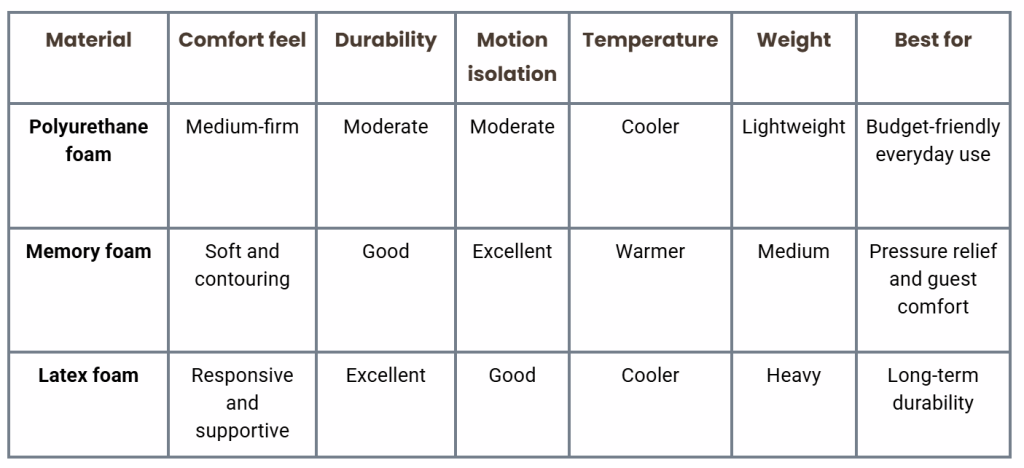
Quick comparison table
Need help choosing the right mattress?
We’ll help you find the right fit — no pressure, just expert advice.
Polyurethane foam
Polyurethane foam (often called polyfoam) is the most common material used in hide-a-bed mattresses. It is lightweight, affordable, and flexible enough to fold easily inside most sleeper mechanisms.
Pros
- Usually the most affordable option
- Lightweight and easy to fold
- Available in many firmness levels
- Often sleeps cooler than memory foam
- Compatible with most sofa bed frames
Cons
- Lower-density foam wears out faster
- Can develop soft spots over time
- Less pressure relief than memory foam
- Cheaper models may flatten quickly
Best use cases
Polyfoam works best when:
- The sofa bed is used occasionally
- Budget matters most
- The sleeper sofa has strict weight limits
- You want a firmer sleeping surface
What density matters?
Foam density affects durability more than softness. As a general rule:
- Low-density foam breaks down faster
- High-density foam lasts longer and supports better
For sofa beds, higher-density foam usually performs better because folding mechanisms place more stress on the mattress.
Memory foam
Memory foam is designed to contour around the body and reduce pressure points. It has become one of the most popular upgrades for sleeper sofas because it can make thin mattresses feel much more comfortable.
Pros
- Excellent pressure relief
- Helps reduce pain at support bars
- Better motion isolation
- Can make thin mattresses feel thicker
- Often improves guest comfort dramatically
Cons
- Can trap more heat
- Some models feel too soft
- Lower-quality memory foam can sag
- Heavier than standard foam
- May make some sleeper sofas harder to close
Best use cases
Memory foam works best for:
- Side sleepers
- People with pressure-point pain
- Guest rooms
- Frequent overnight visitors
- Older sleeper sofas with noticeable support bars
Why memory foam feels different
Unlike regular foam, memory foam slowly compresses under heat and pressure. This creates a contouring effect around the shoulders and hips. That contouring helps distribute body weight more evenly, which can reduce discomfort in thinner sofa bed mattresses.
Latex
Latex foam is known for durability, responsiveness, and long-term support. It feels more buoyant than memory foam and usually sleeps cooler. Latex is less common in sleeper sofas because it is heavier and more expensive, but it can be an excellent premium option.
Pros
- Extremely durable
- Resists sagging better than many foams
- Responsive and supportive
- Sleeps cooler than memory foam
- Naturally resilient during folding
Cons
- Usually the most expensive option
- Heavier than other materials
- May exceed some sleeper sofa weight limits
- Firmer feel may not suit all sleepers
Best use cases
Latex works best for:
- Daily-use sleeper sofas
- Long-term durability
- Back sleepers
- Eco-conscious buyers
- Premium comfort upgrades
Which material lasts the longest?
- Latex lasts the longest
- High-density memory foam
- Standard polyfoam
However, quality matters more than the material name alone — a high-quality polyfoam mattress will outlast a cheap memory foam mattress. The biggest factors affecting lifespan are:
- Foam density
- Mattress thickness
- Frequency of use
- Sleeper weight
- Frame condition
- Folding stress from the mechanism
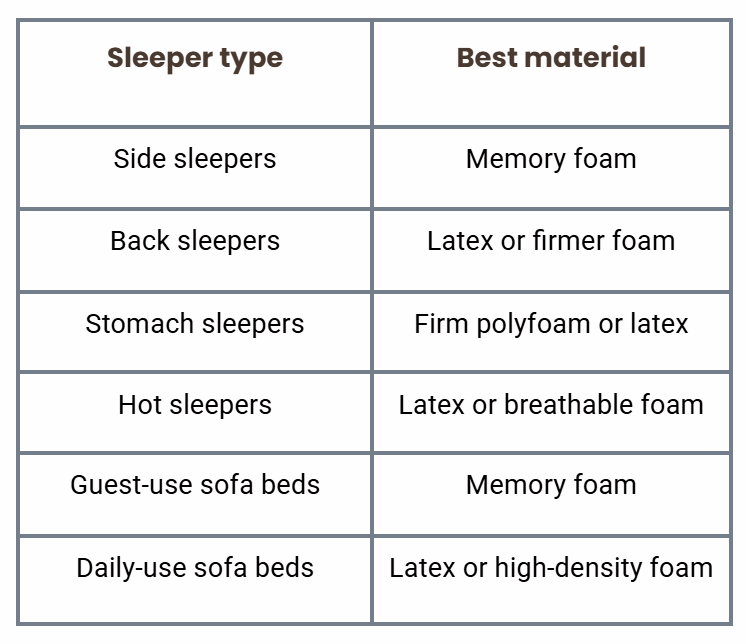
Which material is best for comfort?
Comfort depends heavily on sleeping position and personal preference.
Hybrid sofa bed mattresses
Some sofa bed mattresses combine multiple materials that balance comfort, support, weight, flexibility, and cooling performance. Common combinations include:
- Polyfoam support core with memory foam top layer
- Latex and foam blends
- Gel memory foam over dense base foam
How sofa bed mattresses are constructed
Sofa bed mattresses are usually built in layers rather than a single solid material. Each layer plays a different role in comfort, support, and how well the mattress folds inside the frame.
Comfort layer
This is the top layer you sleep on. It is usually:
- Memory foam for pressure relief
- Latex foam for responsiveness and cooling
- Softer polyurethane foam in budget models
This layer affects how the mattress feels immediately when you lie down.
Support core
The middle layer provides structure and prevents sinking. It is typically:
- High-density polyurethane foam
- Firmer foam designed to handle repeated folding
This layer is critical for durability in sofa beds because it absorbs the stress of the folding mechanism.
Base and cover layer
The outer cover helps the mattress flex and protects internal layers. In sleeper sofas, covers are usually designed to:
- Stretch and compress during folding
- Reduce friction against the frame
- Improve breathability and comfort
Together, these layers determine how well a mattress performs in a folding system—not just the material alone.
Thickness still matters
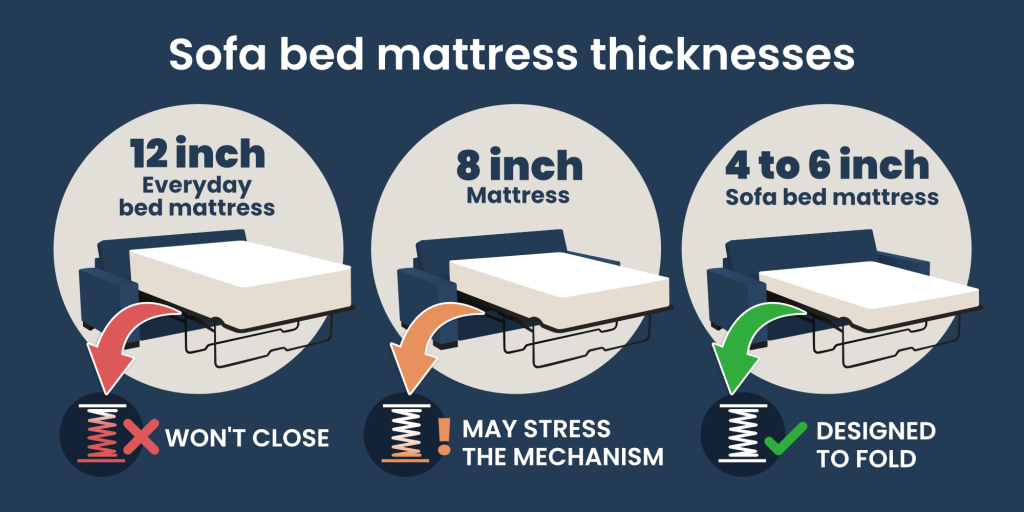
Even the best material cannot make up for a mattress that is too thin.
Most sleeper sofas work best with mattresses between 4 and 5 inches thick. Going thicker may prevent the sofa from closing properly. Material quality becomes especially important in thinner mattresses because there is less room for cushioning and support layers.
Signs your material is breaking down
No mattress material lasts forever. Common signs of wear include:
- Visible sagging
- Soft spots
- Body impressions
- Reduced support
- Feeling support bars through the mattress
- Trouble unfolding evenly
- Increased back or hip pain
If these symptoms appear, the material may be deteriorating internally even if the outer cover still looks fine.
How to choose the best material for your sleeper sofa
Before choosing a replacement mattress, consider:
- How often the sofa bed is used
- Whether the mattress folds bi-fold or tri-fold
- Maximum thickness limits
- Weight restrictions
- Your preferred firmness level
- Heat retention concerns
- Budget
For occasional use, a quality foam mattress will be enough. For frequent use, higher-density memory foam or latex is a better long-term investment.
Questions and Answers
What is the best material for a sofa bed mattress?
Memory foam is often considered the best overall material for sofa bed mattresses because it provides strong pressure relief and helps reduce discomfort from support bars. Latex is usually the most durable option, while standard foam is the most affordable.
Is memory foam good for sofa beds?
Yes. Memory foam works very well in sofa beds because it contours to the body and helps improve comfort on thinner mattresses. Many people choose memory foam to reduce pressure points and improve sleep quality for guests or daily use.
Which sofa bed mattress material lasts the longest?
Latex foam typically lasts the longest because it resists sagging and maintains support over time. High-density memory foam can also last many years, while lower-density polyurethane foam tends to wear out faster.
Do sofa bed mattresses wear out faster than regular mattresses?
Yes. Sofa bed mattresses usually wear out faster because they repeatedly fold inside the frame and experience more concentrated pressure. Thin designs and metal support structures can also increase material breakdown over time.
Is latex too heavy for a sofa bed?
Sometimes. Latex mattresses are heavier than standard foam and memory foam models. Some sleeper sofa mechanisms may struggle with extra weight, especially older frames.
Can you replace a sofa bed mattress with memory foam?
Yes. Many replacement sleeper sofa mattresses use memory foam because it improves comfort and pressure relief while still remaining flexible enough to fold inside the frame.